No products in the cart.

Saba Saba: From Moi’s regime to modern day demands for Justice
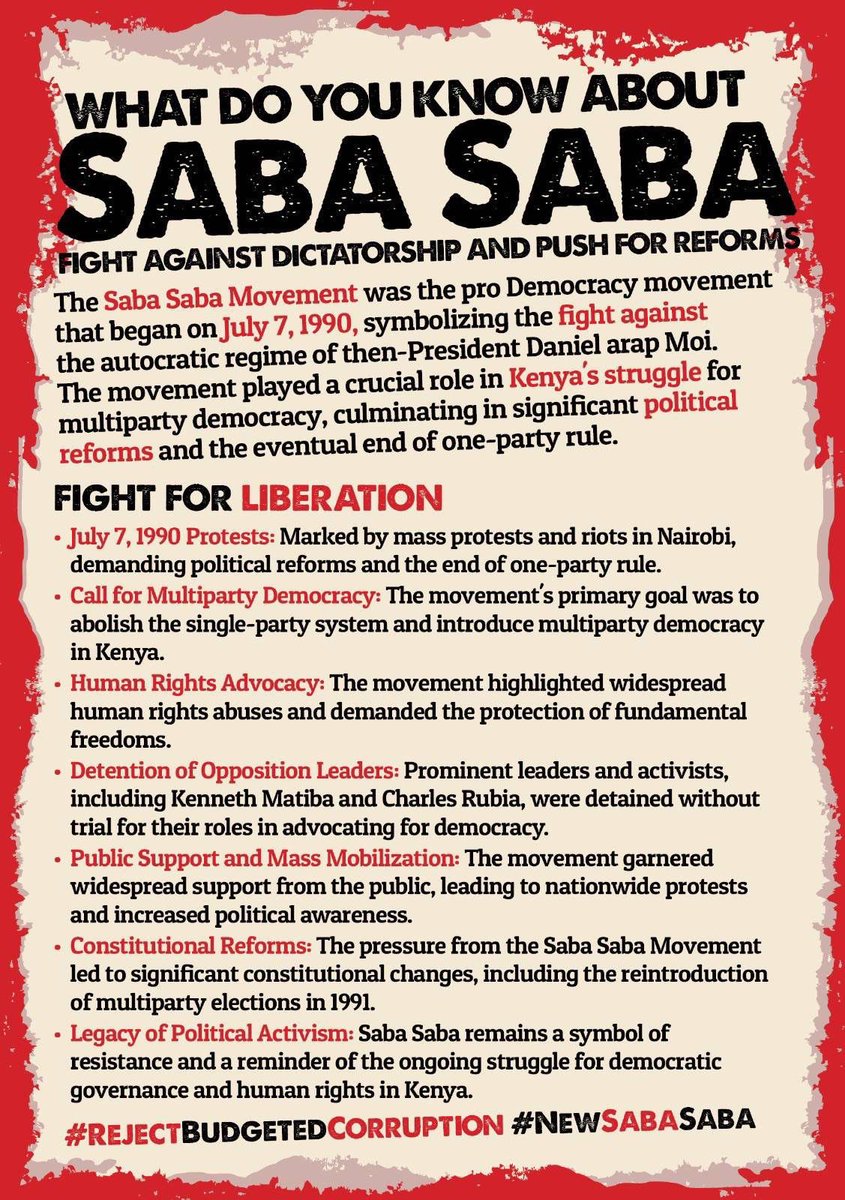
Nairobi, July, 2025
As Kenyans brace for another round of political action on July 7th popularly known as Saba Saba, the echoes of a historic struggle for democracy and justice reverberate through time, from the repressive era of the second president of the Republic of Kenya President Daniel Arap Moi to the streets of Nairobi in the upcoming generation.
Saba Saba, Swahili for 7th July marks a critical chapter in Kenya’s long and painful march to multi-party democracy. On this day in 1990 opposition figures Kenneth Matiba, Charles Rubia and Jaramogi Oginga Odinga defied President’s Moi one-party rule by calling for a public rally at Kamukunji Grounds in Nairobi. The Regime responded with brutal force-arrests, detentions, and deadly clashes that left scores injured and several dead.
Though the rally was violently suppressed, it ignited a nationwide movement that culminated in the reintroduction of multiparty democracy in 1991 forever altering Kenya’s political landscape.
Over the decades, Saba Saba has evolved from a date of resistance into a symbolic day of citizen action. Civil society organizations, student movements, human rights defenders and opposition leaders have used it to push for various causes-from electoral reforms to social justice and economic accountability.
During Mwai Kibaki’s the third president of the Republic of Kenya era, while democratic space expanded, Saba Saba remained a rallying point for those calling for implementation of constitutional reforms and addressing historical injustices.
Under Uhuru Kenyatta, Saba Saba was marked by both celebrations and protest. Issues around police brutality, electoral injustice and corruption brought people to the streets. The day was a thermometer of public discontent, especially in the wake of disputed elections and concerns about democratic backsliding.
As this year marks 35 years of resistance against poor governance, the upcoming Saba Saba event comes at a tense time in the country. The economic strain, coupled with public outcry over the controversial finance bill 2025, has set the stage for renewed civil resistance. Young people also named GenZ buoyed by digital revolution and social media platforms like X (formerly Twitter), have taken the lead in organizing what they term as peaceful protests under hashtags like #RejectFinanceBill, #RutoMustGo, #JusticeforAlbertOjwang among many other hashtags.
Organizers have announced a convergence in Nairobi’s Central Business District CBD where the GenZ intend to read peoples declaration demanding economic reforms, youth inclusion and an end to police brutality.
Security agencies have already declared the protest illegal, citing threats to public order. But civil society and legal experts warn that such actions undermine constitutional rights to freedom of expression and peaceful assembly. But here comes some questions, is/will the protest be peaceful? Who among the protestors and the officers disrupt the peace of the demonstration?
Saba Saba scenario expected to take place on 7th July could be a flashpoint of confrontation or a turning point in the country’s democratic journey, a test of how the Kenya Kwanza administration under the leadership of the fifth president of the Republic of Kenya President William Ruto handles dissent and whether the spirit of Saba Saba still holds sway in modern Kenya.
From the bloodied streets of Kamukunji in 1990 to the smartphone coordinated marches of 2025, Saba Saba remains a powerful reminder of Kenya’s enduring struggle for Freedom, Dignity and Justice.
It is not just a date; it is a spirit. One of that refuses to be silenced, one that demands accountability and one that reminds every government past and future that “Power belongs to the people”.
Authored by,
Yassin Ali