No products in the cart.

Kabarak University Hosts the 15th International Research Conference on Science, Engineering, and Technology: A Deep Dive into AI, Renewable Energy, and Sustainable Development
Kabarak, Kenya – July 10, 2025
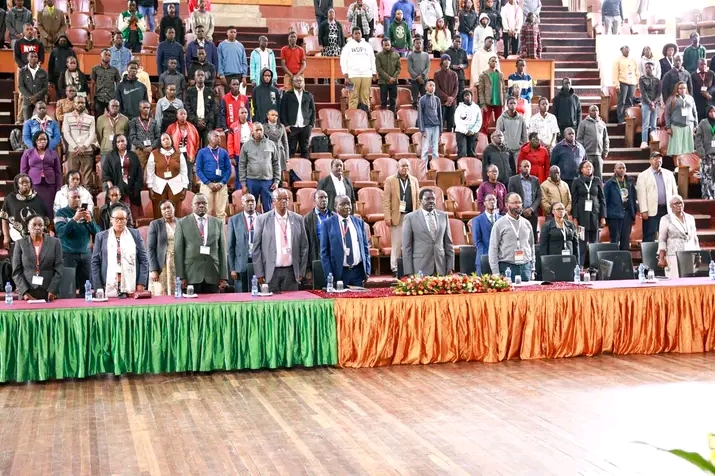
Kabarak University has once again reaffirmed its commitment to advancing knowledge, innovation, and sustainable solutions by hosting the 15th International Research Conference of the School of Science, Engineering, and Technology (SSET) at the Bethel Auditorium, Main Campus. The prestigious two-day event, officially opened today by Vice-Chancellor Prof. Henry Kiplangat, has brought together a dynamic community of scholars, scientists, innovators, and students to engage in robust dialogue and showcase research at the frontiers of science and technology.
Under the theme Innovative Research in Science and Technology for a Sustainable Future, the conference serves as a critical platform to discuss emerging trends in Artificial Intelligence (AI), renewable energy, nanotechnology, environmental health, data science, and related fields. With the world facing urgent ecological, social, and economic challenges, the gathering has underscored the pivotal role of academic research in shaping sustainable and inclusive development.
In his opening remarks, Prof. Henry Kiplangat, Vice-Chancellor of Kabarak University, welcomed delegates and emphasized the importance of collaborative, multidisciplinary research in driving societal transformation.
'“We are not only training scientists and engineers—we are nurturing problem-solvers and leaders who will confront the pressing challenges of our time. This conference reflects our belief that academic research must go beyond theory and be grounded in practical solutions that uplift communities,” said Prof. Kiplangat.
The conference has been graced by a roster of renowned keynote speakers whose work is at the cutting edge of their respective fields:
* Prof. Ciira Maina, Director of the Centre for Data Science and Artificial Intelligence at Dedan Kimathi University of Technology, delivered a compelling address on ethical and scalable AI systems tailored to African contexts. He emphasized the need to build local datasets, encourage inclusive innovation, and develop regulatory frameworks to ensure AI benefits all sectors of society—from agriculture to health and education.
* Prof. Wilkister Moturi, Professor of Environmental Health at Egerton University, spoke on the critical intersection of public health, environmental protection, and climate resilience. Her presentation called for stronger integration of scientific research into national policy, especially in the context of increasing climate-related health risks.
One of the most celebrated moments of the conference was the unveiling of GasGuard, an award-winning AI-powered gas leak detection system developed by a team of Kabarak University students. The project, which combines machine learning with real-time sensor feedback, is designed to prevent household and industrial accidents caused by undetected gas leaks.
GasGuard impressed both academia and industry attendees with its simplicity, affordability, and potential for mass adoption, especially in urban residential areas and informal settlements where gas safety standards are often compromised.
“GasGuard is a clear example of how student-led innovation can address real-life problems using locally available resources. This is the kind of ingenuity our continent needs,” noted Prof. Wilkister
Beyond the keynote addresses, the conference features a wide array of activities, including:
* Parallel technical sessions covering themes such as smart systems engineering, climate-smart energy solutions, sustainable water and sanitation technologies, bioinformatics, and agricultural automation.
* Paper presentations and exhibitions showcasing over 100 research projects by postgraduate students, early-career researchers, and faculty members.
The conference has created an environment where students can network with professionals, explore potential research partnerships, and receive mentorship from seasoned experts. It also highlights the university’s efforts to bridge the academia-industry gap through knowledge transfer, patent development, and community-oriented research.
As the event enters its second day, participants are expected to continue exploring themes that align with Kenya’s Vision 2030, the African Union Agenda 2063, and the United Nations Sustainable Development Goals (SDGs).
In a statement from the organizing committee, the SSET Dean, Dr. Ann Njeri, applauded the enthusiasm of the participants and reaffirmed the school’s vision to be a centre of excellence in research and innovation.
“This conference is not the end—it is a launching pad. It is our hope that the ideas exchanged here will spark new projects, policies, and partnerships that drive Africa’s development agenda forward,” she said.
In conclusion the 15th International Research Conference at Kabarak University stands as a testament to the transformative power of research when combined with purpose, innovation, and collaboration. As the conversations continue, the university remains committed to leading by example—nurturing knowledge that builds not just careers, but a better future for all.
Authored by,
Yassin Ali